

AB-QM afsluiters
Product types shown: 3

AB-QM
De Danfoss AB-QM is een drukgecompenseerde regelafsluiter (Pressure Independent Control Valve, PICV) die een hoge nauwkeurigheid en duurzaamheid combineert met een toonaangevende gebruiksvriendelijkheid. Het ontwerp van de AB-QM is volledig gericht op het tijdig en binnen budget laten draaien van uw project en het leveren van het meest efficiënte HVAC-systeem.
Drukgecompenseerde afsluiters zijn regelafsluiters met een automatische inregelfunctie. Een ingebouwde drukregelaar handhaaft een constant drukverschil over de regelafsluiter, wat zorgt voor volledige autoriteit en automatische debietbegrenzing. Door twee functies te combineren in één – regeling en automatisch hydraulisch balans – bieden de PICV’s van Danfoss een kostenefficiënte oplossing voor de uitdagingen waarmee vooruitstrevende ontwerpers van HVAC-systemen worden geconfronteerd. De AB-QM kan ook worden gebruikt in industriële koelsystemen.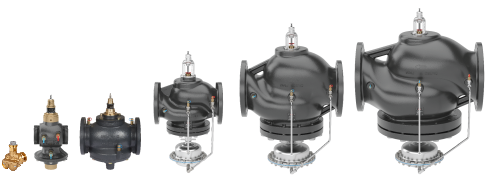
AB-QM ANSI
The AB‑QM control valve provides pressure independent regulation of flow while also providing flow limiting system balance. The valve internally contains a unique differential pressure regulator which automatically adjusts to normal changes in system pressure from valves opening and closing or changing of pump speed. As a result of maintaining a constant pressure for the temperature control valve, valve authority is maintained high. This allows for precise interaction with the temperature controller and unparalleled system operation as indicated by assuring the highest possible coil log mean temperature difference (ΔT).
The valve is easily set and adjusted to provide the precise flow required for each terminal unit. Design calculation and commissioning effort normally required for it's control and balance valves are virtually eliminated because of the built in automatic pressure control regulator. A wide selection of actuators are available for the AB‑QM providing further control features for the valve, making it an ideal selection for the simplest of two position control strategies to the precision required for modulating control and variable speed pump optimization.
